Working at Starbucks means being part of one of the most recognizable coffee brands in the world, and like any large retail operation, scheduling plays a huge role in keeping stores running smoothly. If you’re a current partner (Starbucks’ term for employees), a prospective hire, or a manager trying to understand how shift planning works, this guide breaks down everything you need to know about the Starbucks weekly schedule system.
How Starbucks Schedules Its Employees
Starbucks uses a centralized scheduling system that helps store managers create weekly shift plans based on projected customer traffic, sales trends, and labor budgets. Unlike a simple spreadsheet, this system pulls historical data to predict busy periods—like early mornings, lunch rushes, and weekend mornings—so that stores are staffed appropriately without over- or under-scheduling partners.
Most Starbucks locations release their weekly schedules about one to two weeks in advance, though this can vary by store, region, and manager preference. Schedules typically run from Sunday to Saturday, though some stores may follow a different weekly cycle depending on local management practices.
Where to Find Your Starbucks Schedule
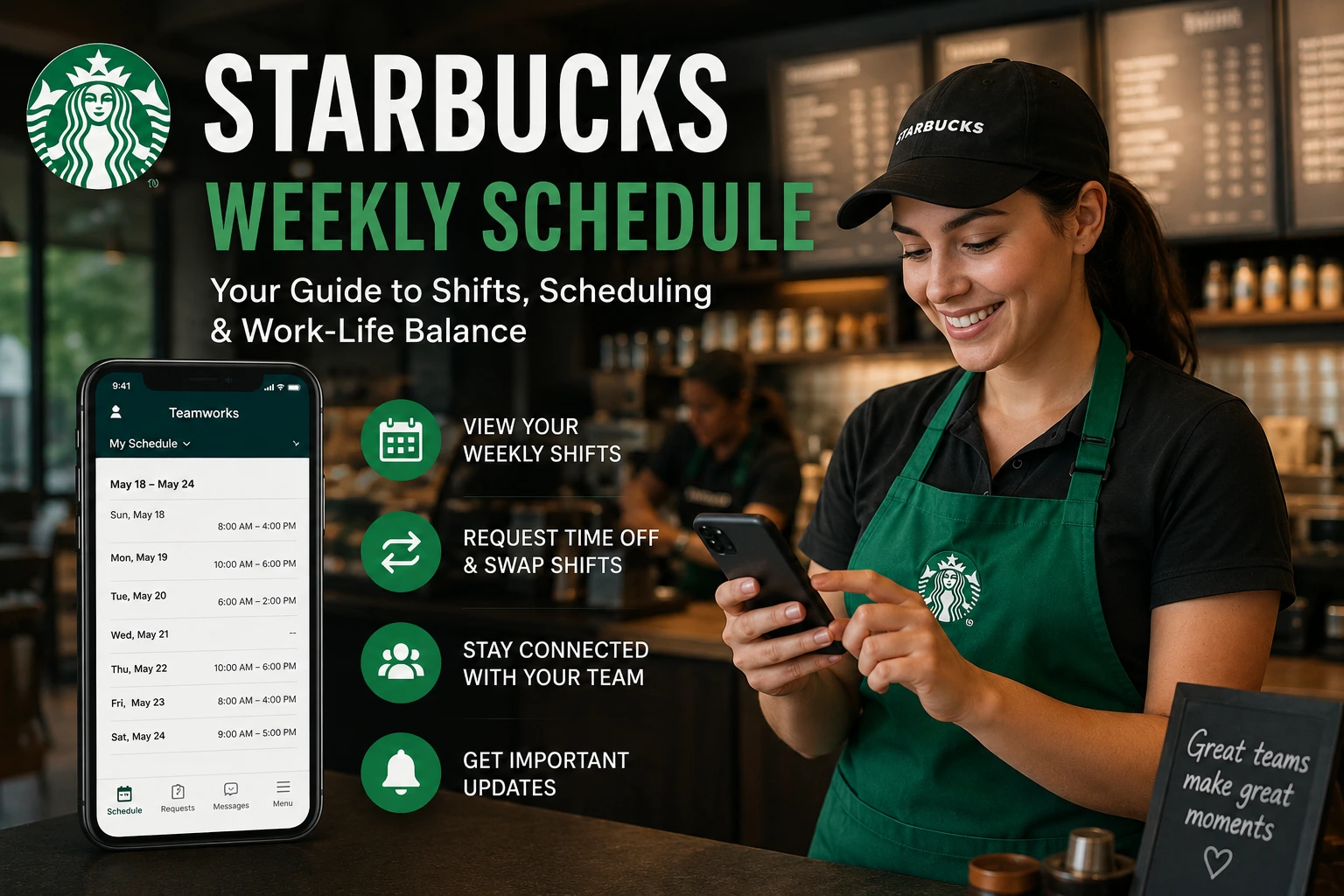
Starbucks partners can usually access their schedules through the Teamworks app, which has become the standard scheduling and communication tool across most company-operated stores. Through Teamworks, employees can:
- View upcoming shifts for the current and following week
- Request time off or shift swaps
- Communicate with managers and teammates
- Check store announcements and updates
Some locations may still rely on printed schedules posted in the back office, especially smaller franchise or licensed stores, but the majority of corporate Starbucks locations have shifted to digital scheduling through the app.
Factors That Influence Weekly Scheduling
Several factors go into building an effective weekly schedule at Starbucks:
1. Availability and Flexibility When you’re hired, you submit your availability, which managers use as a baseline for scheduling. Partners with more flexible availability often get more consistent hours, while those with limited availability may see more variation week to week.
2. Store Traffic Patterns Every Starbucks location has unique peak hours. A store near an office park might see its busiest rush between 7 and 9 a.m., while a location near a college campus could stay steady well into the evening. Managers adjust staffing levels accordingly.
3. Labor Budgets Corporate sets labor cost targets for each store, and managers must balance adequate staffing with staying within budget. This is why schedules can sometimes feel tighter during slower sales periods, like certain weekdays or off-peak seasons.
4. Seasonal Demand Fall and winter months, especially around the Pumpkin Spice Latte launch and the holiday season, tend to bring higher customer volume. Expect schedules to reflect increased staffing needs during these periods.
5. Partner Requests and Time Off Vacation requests, school schedules, and personal commitments all factor into how a weekly schedule comes together. Most Starbucks locations encourage partners to submit time-off requests as early as possible to avoid scheduling conflicts.
Typical Shift Structures
While shift lengths can vary, most Starbucks partners work between 4 and 8 hours per shift, depending on whether they’re part-time or full-time. Common shift types include:
- Opening shifts: Usually starting between 4:30 and 6 a.m., these involve prepping the store, brewing coffee, and setting up for the morning rush.
- Mid-day shifts: Covering the lunch rush and early afternoon lull.
- Closing shifts: Involving cleanup, inventory checks, and securing the store, often ending between 9 p.m. and 11 p.m. depending on location hours.
Full-time partners (generally defined as those scheduled for an average of 20+ hours per week for benefits eligibility) may have more predictable weekly patterns, while part-time partners often see more variability based on store needs.
Tips for Managing Your Starbucks Weekly Schedule
If you’re a partner trying to navigate your weekly schedule more effectively, consider these practical tips:
- Update your availability regularly. If your school or personal schedule changes, let your manager know as soon as possible so your availability reflects your actual constraints.
- Use the Teamworks app consistently. Checking the app regularly ensures you don’t miss shift changes, swap requests, or important store updates.
- Communicate early for time-off requests. Popular days off, like weekends or holidays, fill up fast, so submitting requests early increases your chances of approval.
- Build good relationships with teammates. Shift swaps are common, and having a reliable network of coworkers willing to trade shifts can make managing personal commitments much easier.
- Track your hours. Keeping a personal record of your scheduled versus worked hours can help you catch any discrepancies in pay or scheduling errors early.
For Managers: Building an Effective Weekly Schedule
Store managers juggling the Starbucks weekly schedule have their own set of best practices to keep things running smoothly:
- Review sales forecasts before building the schedule to align staffing with expected demand.
- Balance experienced and newer partners on each shift to maintain consistent service quality.
- Avoid excessive last-minute changes, which can hurt morale and create scheduling chaos.
- Factor in mandatory breaks and labor law compliance, which varies by state and can affect how shifts are structured.
- Keep communication transparent, especially when labor budgets tighten and hours need to be adjusted.
Common Scheduling Challenges
Like any large-scale retail scheduling system, the Starbucks weekly schedule isn’t without its challenges. Partners sometimes report inconsistent hours, especially during slower business periods, which can make budgeting personal finances difficult. Last-minute call-outs can also disrupt planned schedules, requiring managers to scramble for coverage.
Additionally, balancing partner preferences with business needs is an ongoing challenge. While Starbucks aims to accommodate availability and time-off requests, the reality of running a high-volume retail operation means flexibility is often required from both sides.
Final Thoughts
Understanding how the Starbucks weekly schedule works—from how shifts are built to where you can access them—can help both new and experienced partners navigate their work life more smoothly. Whether you’re trying to secure more consistent hours, request time off, or simply stay on top of your upcoming shifts, staying proactive with communication and using tools like the Teamworks app can make a significant difference.
For managers, building a schedule that balances labor costs, customer demand, and partner satisfaction is an ongoing balancing act, but with the right planning tools and clear communication, it’s possible to create a schedule that works well for the entire team.
Whether you’re clocking in for an early opening shift or wrapping up a late close, knowing how the scheduling process works puts you in a better position to plan your week—and your life—around your job at Starbucks.